
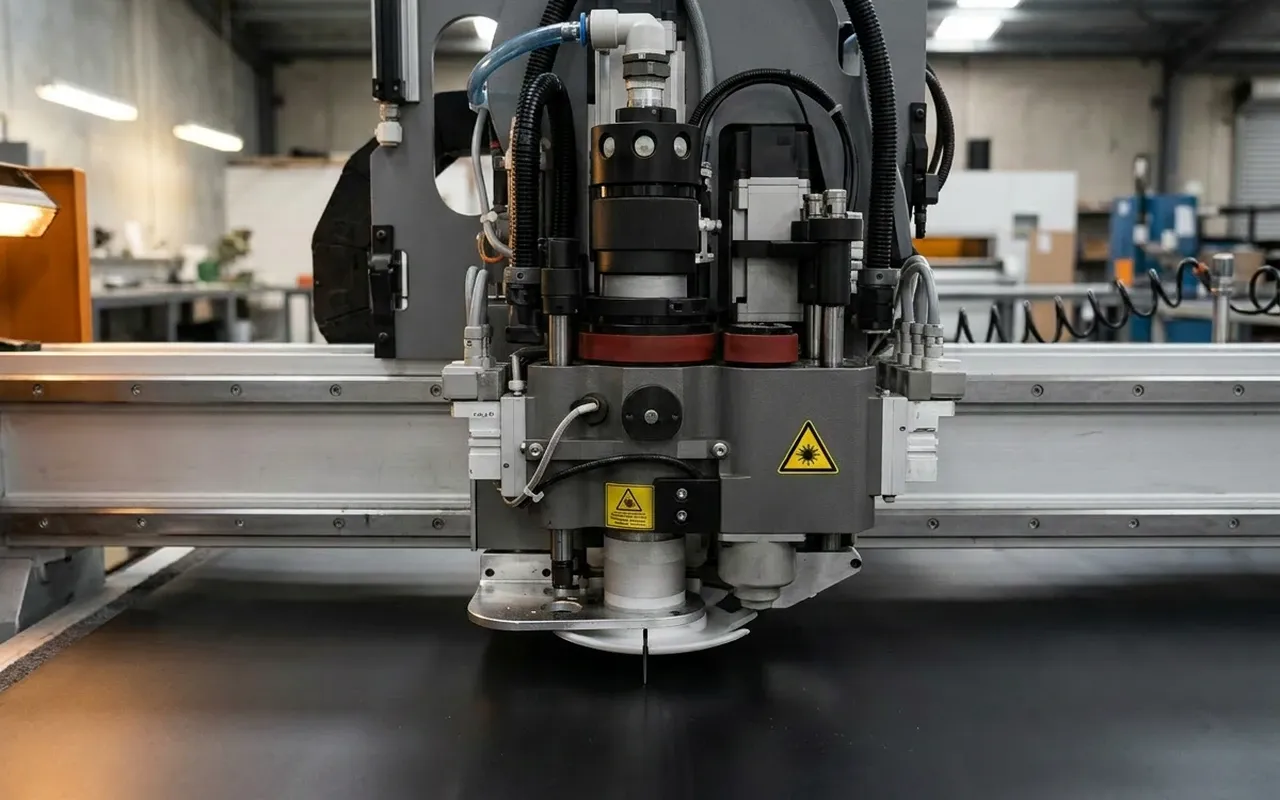
Telecommunications Gaskets & Seals
IP-rated enclosure seals and EMI shielding for a network that lives outdoors.
Australia's three mobile operators run over 26,000 base station sites between them — more than 15,000 now 5G-capable — while NBN Co connects 8.6 million premises through fibre, fixed wireless, and satellite. That outdoor equipment faces UV, salt spray, dust storms, and temperature swings year-round. We supply IP-rated enclosure gaskets, conductive EMI shielding, and thermal interface materials for 5G base stations, fibre distribution hubs, underground pits, and edge computing nodes. We specify seals for 15–20 year outdoor service life, where maintenance visits may be months apart. UV-stabilised EPDM typically retains over 70% elongation after 10–12 years of rooftop UV exposure in Australian conditions. Carriers maintain approved-products lists (APLs) referenced in build packs and outdoor telecoms maintenance record (OTMR) specifications. We supply against carrier-nominated material codes where required and hold compound datasheets and certificates of conformance (CoCs) to support APL submissions.
Four Decades of Escalating Seal Requirements
1G — Analogue Voice
Large weatherproof cabinets with simple rubber door seals. Environmental protection was basic: keep rain out of the exchange.
2G: GSM Digital
Smaller base station enclosures required better dust sealing. EMI shielding began to matter as digital signals became sensitive to interference.
3G — Mobile Data
Higher power densities introduced thermal management needs. Gaskets now had to handle heat dissipation as well as ingress protection.
4G LTE: Broadband
Small cells on rooftops and poles needed IP67-rated seals in compact form factors. Conductive gaskets became standard for EMI compliance.
5G — mmWave & Massive MIMO
Frequencies above 24 GHz demand specialised conductive elastomers. Active antenna units generate concentrated heat in sealed radomes.
6G — Early Research
Sub-terahertz (sub-THz) frequencies (100–300 GHz) may need gasket materials with controlled dielectric properties. Industry research into seal-integrated thermal management is ongoing, with commercial deployment not expected before the mid-2030s.
Where 5G Pushes Sealing Limits
IP68 Enclosure Protection
5G small cells and macro base stations sit on rooftops, poles, and underground pits. Seals must exclude dust completely and survive sustained immersion during storms and flooding.
EMI/RFI at mmWave Frequencies
At 24–40 GHz, even a sub-millimetre enclosure gap behaves as a slot antenna and radiates. Conventional foam gaskets lose effectiveness here. Conductive elastomers need to hold above 60 dB at these frequencies, and geometry matters as much as material.
Thermal Management
Active antenna units run hot. 85 °C continuous inside a sealed enclosure isn't unusual. Gaskets that compression-set under sustained heat lose their seal years before the equipment is due for replacement. The seal has to outlast the radio.
Fibre-Optic Splice Protection
Fibre distribution hubs and splice closures need dust-free, moisture-free sealing to prevent signal attenuation from contaminated connectors.
Underground Pit Sealing
Telstra and NBN Co underground pits (P5, P6, P8, P9 types) house fibre joints and copper terminations below ground. Pit covers and cable entries need water-tight seals per AS/CA S009:2020 to prevent flooding and corrosion.
Battery Enclosure Sealing
Valve-regulated lead-acid (VRLA) and lithium-ion battery cabinets at remote cell sites need seals that balance ventilation with water exclusion. Materials must meet UL 94 V-0 flame ratings and resist electrolyte exposure.
Sealing Across the Network
A typical 5G macro site has 30–50 individual sealing points, running from the radome at the top of the tower down to the underground pit at the base. Each seal operates in a different environment with different material requirements.
Tower-Top Equipment
The hardest sealing points are at the top. Active antenna units run hot, radome housings face full UV, and microwave backhaul dishes get visited maybe twice a year. EPDM and fluorosilicone dominate.
Mid-Mount Cabinets
Radio remote units (RRUs), power supply cabinets, and fibre patch panels. IP66/IP67 door seals with EMI shielding on RF compartments. Thermal pads for heat transfer to cabinet walls.
Ground-Level Infrastructure
Underground pits (P5–P9), street-level cabinets, and battery shelters. Water-tight pit cover gaskets per AS/CA S009:2020. IK10-rated cabinet door seals resistant to impact and tampering.
Cost of Seal Failure
A single water ingress event at a remote cell site can take the site offline for days. Equipment replacement alone runs $50,000–$150,000. A 5G Massive MIMO radio unit costs $10,000–$30,000 per unit, before labour and SLA penalties. On the EMI side, ACMA enforces EMC compliance under the Radiocommunications Act 1992; civil penalties for severe interference run to several hundred thousand dollars in penalty units. The gasket is cheap insurance against both failure modes.
Sealing Across Australian Climate Zones
Australia's telecoms network spans every climate zone on the continent. A seal material that works in Melbourne's temperate conditions may fail within two years on a Darwin rooftop or a Nullarbor relay station. We specify materials for the actual operating environment, not the average.
Tropical (North Queensland, NT Top End)
Inland Queensland enclosures are where EPDM door seals can fail within 24 months. The usual cause is compression set from sustained 75 °C internal temperatures, not the UV degradation most installers suspect first. Sustained humidity above 80%, UV index 11+, and cyclone-season debris impact compound the problem. EPDM with UV stabilisers is the baseline; silicone is preferred where temperatures cycle above 70 °C inside sealed radomes. Specify stainless steel hardware. Fastener corrosion accelerates gasket degradation.
Arid (Central Australia, Nullarbor)
Extreme diurnal temperature swings (−5 °C overnight to +50 °C midday at equipment surface). Fine red dust infiltrates any gap. Closed-cell sponge with dust-tight compression is non-negotiable. Silicone outperforms EPDM here because it resists compression set across the thermal range.
Coastal (Sydney, Perth, South-East QLD)
Salt spray corrosion within 1 km of the coast per AS 4312. Stainless steel cabinet hardware and chloride-resistant gasket materials are essential. EPDM handles salt well; neoprene is acceptable for non-critical enclosures. Conductive gaskets need corrosion-protected filler (silver-plated, not bare aluminium).
Alpine (Snowy Mountains, Victorian Highlands)
Freeze–thaw cycling, snow load on cabinet roofs, and temperatures below −10 °C. Gasket materials must maintain flexibility at low temperatures, so silicone (rated to −60 °C) is the primary choice. EPDM (sponge grade) remains flexible to approximately −40 °C. Avoid neoprene below −20 °C.
Telecommunications Sealing Materials
Every generation of network equipment pushes new demands onto its seals: higher operating temperatures, tighter IP ratings, and shielding at frequencies that didn't exist a decade ago. We carry these materials for telecoms applications.
Conductive Elastomers
At 5G and mmWave frequencies, shielding depends as much on gasket geometry, compression, and surface finish as on the compound. Silver-plated aluminium filled silicone to MIL-DTL-83528J gives >80 dB shielding effectiveness to 10 GHz; nickel-graphite fills are a cost-effective commercial alternative where QPL listing is not required.
Closed-Cell EPDM Sponge
UV-stable, ozone-resistant sponge for outdoor cabinet door seals. Maintains sealing force across repeated door cycles in coastal and inland climates.
Fluorosilicone
Fuel and solvent-resistant elastomer for harsh environments. Retains flexibility from −55 to +200 °C, which suits remote solar-powered telecoms sites.
Low-Outgassing Silicone
Prevents chemical fogging on fibre-optic connectors and sensitive optical assemblies. Meets ASTM E595 outgassing limits for enclosed electronics.
Neoprene
General-purpose closed-cell neoprene for equipment mounting pads and pit covers. Oil, ozone, and weather resistant for buried and outdoor infrastructure.
Thermal Interface Pads
Gap-filling pads from 1.5 W/mK (general electronics) through 8.3 W/mK (AAU-grade, e.g. Parker Chomerics PAD 80) to 12.0 W/mK for concentrated heat sources. Cut to enclosure drawings in 0.5–5.0 mm thicknesses. Low oil-bleed grades prevent pump-out over 10+ year service life.
Workshop Note
Maintenance windows at remote cell sites are typically 6–12 months apart. We've seen lab-rated 5-year materials degrade in 18 months on a sun-exposed Pilbara tower. Specify for the harshest expected condition, not the average. The cost difference is negligible compared to a single truck roll to a remote site.
Telecoms Sealing Standards
A single outdoor enclosure can fall under IP rating (AS 60529), EMC emissions (CISPR 32), flammability (UL 94), impact resistance (IEC 62262), and equipment safety (AS/NZS 62368.1), all at once. The gasket material has to satisfy every standard simultaneously, not just one. We supply EPDM, silicone, and conductive elastomers with UL 94 V-0 ratings and CISPR 32 compliance data available on request.
Ingress Protection Rating (IP Code)
Defines IP54–IP68 test methods for dust and water protection of telecoms enclosures. AS 60529 is the Australian adoption of IEC 60529 Edition 2.2.
Audio/Video, IT and Communication Equipment Safety
Replaces IEC 60950-1. Hazard-based safety including fire enclosure requirements. AS/NZS 62368.1:2022 (3rd Edition) is the current mandatory Australian/NZ adoption.
Restriction of Hazardous Substances
Limits lead, mercury, cadmium, and other hazardous substances in electronic equipment materials.
Registration, Evaluation, Authorisation of Chemicals
Requires disclosure and restriction of substances of very high concern (SVHCs) in supplied materials.
Tests for Flammability of Plastic Materials
Classifies materials from HB to V-0 for self-extinguishing behaviour in electronics enclosures.
Installation Requirements for Customer Cabling
The ACMA-mandated Wiring Rules for customer cabling: cable segregation, separation from power, earthing, and mechanical protection at entry points. Pit-cover and cable-entry watertightness itself is governed by AS 3996 and carrier design guidelines, which S009-compliant installations must also meet.
Enclosures for Electrical Equipment, Environmental Considerations
Covers environmental protection ratings (Types 3R, 4, 4X) for outdoor telecoms enclosures, often specified alongside IP ratings.
Degrees of Protection by Enclosures (IK Code)
Impact protection rating for telecoms enclosures. IK10 (20 J) commonly specified for street-level cabinets and pits subject to vandalism or vehicle strike. Amendment 1 (2021) adds IK11 for higher-energy impacts.
Environmental Conditions and Tests for Telecoms Equipment
Multi-part series: Part 1 classifies environmental conditions (storage, transport, stationary use); Part 2 specifies the corresponding environmental tests (temperature, humidity, vibration) for outdoor and indoor telecoms equipment.
Electromagnetic Compatibility — Emissions
Limits conducted and radiated emissions from multimedia equipment including telecoms terminals and infrastructure. AS/NZS CISPR 32 is the Australian/NZ adoption. Amendment 1 (2020) updates measurement procedures.
Electronic Equipment Cabinets (Outdoor)
De facto standard for outdoor telecoms cabinet construction and weatherproofing tests. Equipment operating classes (e.g. Class 2, −40 °C to +65 °C) are defined in the companion GR-3108-CORE. Widely referenced by Australian carriers deploying US-sourced outdoor enclosures.
Access Covers and Grates
Watertightness and gas-tightness test methods for cover-to-frame sealing in NBN and Telstra pit covers. EPDM and neoprene cover gaskets must pass the AS 3996 watertightness test. Referenced (unversioned) by NBN Co's pit and conduit design guideline (NBN-TE-CTO-194).
Edge Computing and Open RAN
Open RAN architecture disaggregates base station hardware into separate radio, distributed, and centralised units, often from different vendors. Each unit sits in its own sealed enclosure, multiplying the sealing points per site. Where a traditional macro site had one large cabinet, an Open RAN deployment may have four or five smaller enclosures, each needing independent IP67+ protection.
Edge compute nodes co-located at cell sites add concentrated heat loads: 500–2,000 W in enclosures the size of a bar fridge. Thermal interface pads become as critical as the environmental seal. We supply both: IP-rated door gaskets and thermal gap pads cut to the enclosure manufacturer's drawings.
Sealing Points per Open RAN Site
- Radio Unit (O-RU) — radome seal, RF connector boots, thermal pad to heatsink
- Distributed Unit (O-DU) — IP66 cabinet door seal, multi-cable transit modules (Roxtec-equivalent rubber compression-block systems sealing mixed copper / fibre / coax bundles to IP66 + IK10 + EMC continuity), EMI gasket on RF compartment
- Centralised Unit (O-CU) — indoor or outdoor cabinet seal, thermal management, fibre entry seals
- Power supply cabinet: battery compartment seal (UL 94 V-0 rated), ventilation gasket, cable entry
- Backhaul equipment: microwave dish radome, fibre splice closure, junction box seal
Telecoms Sealing Products
Extruded Profiles
Door Seals, Edge Trim & Custom Extrusions
Explore ProductSoft-Cut Gaskets
CNAF, Rubber, PTFE, Graphite, and more
Explore ProductO-Rings & Cord
Standard & Custom Elastomer O-Rings and Cord Stock
Explore ProductSealing & Insulation Tapes
PTFE, Insulation & Speciality Tapes
Explore ProductMoulded Parts
Custom Moulded Rubber Components
Explore ProductExplore Further
Explore Further
Sealing for 5G and Beyond?
From IP68 base station gaskets to conductive EMI shielding, we cut seals to your enclosure drawings.
- IP68-rated environmental seals
- MIL-DTL-83528J conductive gaskets
- Custom-extruded cabinet profiles
- Australia-wide delivery available
Disclaimer
This page is provided for general engineering reference only and does not constitute professional advice, specification, or guarantee of performance. Actual results depend on specific application conditions. Universal Gaskets Pty Ltd accepts no responsibility or liability for decisions made based on this information. For full terms, see our Terms & Conditions.
Temperature ranges, chemical resistance ratings, and mechanical properties cited on this page are typical values for standard grades. Actual performance varies with compound formulation, filler package, and service conditions — contact us to confirm suitability for your specific application.