
Defence & Aerospace Gaskets & Seals
MIL-SPEC gaskets, seals, and shims for platforms operating across the full environmental envelope — from submarine sea-water systems to high-altitude airframe joints.
Defence sealing tolerates no ambiguity. Every gasket must trace to a qualified material, meet a published specification, and survive conditions that commercial parts never face. We supply elastomeric and metallic sealing products. On request, we provide material certification, batch traceability, and documentation packages aligned to AS 9100D (the aerospace quality management system) and EN 10204 Type 3.1 (batch-specific material test reports).
Defence Sealing Standards
The specification is the starting point, not an afterthought. Which specification applies to your contract depends on the platform origin and prime contractor. Australian defence procurement sits under the ASDEFCON (Australian Standard for Defence Contracting) framework, which references US MIL-SPEC, AMS, and UK DEF STAN designations.
We source and supply materials traceable to the MIL-SPEC, AMS, and DEF STAN designations these contracts reference, with full material certification on request.
Generic Supply vs. Specification-Led Supply
Materials for Defence Service
Defence environments span cryogenic fuel systems, jet-fuel-soaked airframes, and salt-spray naval decks. Each demands a specific elastomer or alloy — not a general-purpose substitute.
FVMQ (fluorosilicone)
The default aerospace seal material. Resists jet fuel, hydraulic fluid, and de-icing solvents across the full airframe temperature envelope. Qualified to MIL-DTL-25988C. For satellite and upper-stage work, ASTM E595 screens low-outgassing grades (TML < 1.0%, CVCM < 0.10%). Sensitive optical and electronic assemblies need this — they cannot tolerate condensable fogging.
FKM (Viton)
High-temperature fuel and hydraulic resistance for engine bay and APU (Auxiliary Power Unit) sealing. Compatible with MIL-PRF-5606 (mineral hydraulic), MIL-PRF-83282 (fire-resistant hydraulic), and JP-8 (NATO-standard jet fuel). Not suitable for Skydrol or other phosphate-ester hydraulic fluids — use EPDM where phosphate-ester exposure is expected. AMS 3216 qualified compounds.
Silicone (VMQ)
Continuous service from −60 °C to +230 °C. Used in environmental seals, hatch gaskets, and electronics bay enclosures where thermal cycling between ground soak and altitude is the primary design driver. AMS 3301–3305 grade range. Not fuel-resistant; use FVMQ where fuel contact is possible.
Inconel 625
Turbine-adjacent joints have one requirement above all others — they cannot soften. Inconel 625 is a solid-solution strengthened nickel-chromium superalloy that retains tensile strength to 980 °C per AMS 5599. Used for exhaust gaskets, turbine-adjacent seals, and high-temperature structural joints.
Inconel 718
Precipitation-hardened nickel superalloy with higher yield strength than 625, but limited to ~650 °C under sustained load (precipitation-hardening phases become unstable above this). Used for high-strength bolted flanges, fastener gaskets, and structural joints. AMS 5662/5663.
Monel 400
Nickel-copper alloy with proven sea-water corrosion resistance. General-service thermal capacity reaches ~538 °C in inert atmospheres. In actual seawater service the practical limit comes from cavitation, erosion, and dissolved-oxygen behaviour — not the alloy's bulk thermal rating. Standard gasket material for submarine piping, sea-water cooling, and naval hull penetrations. QQ-N-281 / ASTM B127.
PTFE (Virgin / Filled)
Hydrazine is one of the most chemically aggressive propellants in service — PTFE is inert to it. Also resistant to JP-8, Skydrol (phosphate ester) hydraulic fluids, and concentrated acids including nitric and hydrofluoric. Low friction coefficient (0.05–0.10) suits actuator seals and bearing surfaces. Glass-filled (Type II) and carbon-filled (Type III) grades improve creep resistance under sustained bolt load. ASTM D3308 Type I–IV classifications.
NBR (nitrile)
If a submarine has a sea-water piping seal, it's probably NBR. The workhorse of naval hydraulics and general-purpose fluid sealing. MIL-PRF-6855F Class 1 and DEF STAN 02-337 qualified. Good resistance to petroleum fluids, mineral oils, and hydraulic media. The catch: 15-year shelf life per SAE AS 5316, shortest of any common defence elastomer, which means active stock rotation for forward-deployed spares.
Conductive Elastomers
In defence procurement, the dividing line is QPL listing. Compounds qualified under MIL-DTL-83528J use silver or silver-plated aluminium fills and give >80 dB shielding effectiveness to 10 GHz for EMI/RFI enclosure gasketing; nickel-graphite fills are the commercial alternative where the contract does not call for QPL.
Material Substitution
Never substitute a "commercial equivalent" for a MIL-SPEC compound without written approval from the design authority. FKM is not a single compound: Type A dipolymers (~66% fluorine) and Type F terpolymers (~70% fluorine) are different polymer architectures, and that determines fuel resistance. A general-purpose FKM that passes a quick bench test may swell unacceptably in JP-8 after sustained immersion at operating temperature.
Materials Matched to Platform Service
Submarine
Sea-water & hydraulic sealing
Sea-water and hydraulic service calls for FKM, NBR, Monel 400, and Inconel
Frigate
Deck & machinery gaskets
Surface-combatant deck and machinery joints work to MIL-PRF-6855F and DEF STAN 02-337
Armoured Vehicle
Engine bay & hull seals
Engine-bay and hull seals run on FKM, silicone, and high-temp exhaust gaskets
Air & GSE
Fuel, hydraulic & environmental
Flight-line and ground support equipment: fuel, hydraulic, and environmental sealing
Next-Generation Platform Requirements
The SSN-AUKUS programme — Australia's acquisition of nuclear-powered submarines under the AUKUS (Australia–UK–US) trilateral pact — introduces sealing demands that conventional diesel-electric platforms never faced. Primary and secondary circuit seals operate at higher temperatures and pressures. Nuclear safety classification adds documentation requirements well above standard defence procurement.
The MQ-28 Ghost Bat (Loyal Wingman) programme pushes the other direction: unmanned airframes with no on-board maintenance capability need seals that survive their full operational life without inspection. The design cannot tolerate compression set, outgassing, or age-related degradation over the platform's service life.
Emerging Supply Chain Requirements
- Nuclear-grade material traceability (EN 10204 Type 3.2 with independent witness verification) expected for submarine build programmes
- Radiation-resistant elastomer grades (EPDM, silicone) for primary circuit-adjacent seals; an emerging requirement as the supply chain develops
- Extended shelf-life documentation for forward-deployed spares
- Australian Industry Capability (AIC) requirements driving domestic sourcing. We are qualifying suppliers and building stock positions to support this supply chain
Traceability and Counterfeit Prevention
Defence procurement engineers don't just buy a gasket — they buy a documented material with a traceable lineage. A seal that cannot be traced back to a qualified raw material lot is, for procurement purposes, an unknown material regardless of how well it performs on the bench.
EN 10204 Certificates
Type 3.1 means the batch you received was tested. Not a representative sample from a different run, but the actual production batch. Type 3.2 adds independent third-party witness verification. We supply Type 3.1 as standard on request; Type 3.2 where the contract demands it.
Batch Traceability
Every gasket we cut from a qualified material carries a batch number linking it to the raw material lot, cure date, and supplier Certificate of Conformance. Ask for the full documentation pack with your order. If an issue surfaces in service three years later, the chain leads back to the specific compound batch.
SAE AS 6174A Compliance
SAE AS 6174A covers counterfeit prevention for non-electronic materiel: gaskets, seals, fasteners, and raw materials. Suppliers must demonstrate material provenance, maintain approved supplier lists, and run receiving inspection procedures. AS 5553 covers electronic parts only — a common point of confusion in procurement that can leave non-electronic components unprotected.
Procurement Tip
Specify your documentation requirements at the RFQ stage, not after delivery. We've had orders where the cert package took longer to assemble than the gaskets took to cut. EN 10204 Type 3.1 certificates and shelf-life data take time. Building them into the order from the start avoids delays at goods receipt.
Installation Matters
Industry data from the Fluid Sealing Association (FSA) shows roughly 85% of gasket failures trace back to installation error — not material defects. Over-torquing, uneven bolt loading, and dirty flange faces cause more leaks than the wrong compound. For defence applications where re-work is expensive and downtime is operationally disruptive, specifying an installation procedure alongside the gasket material is worth the effort.
Gaskets, Seals, and Precision Shims
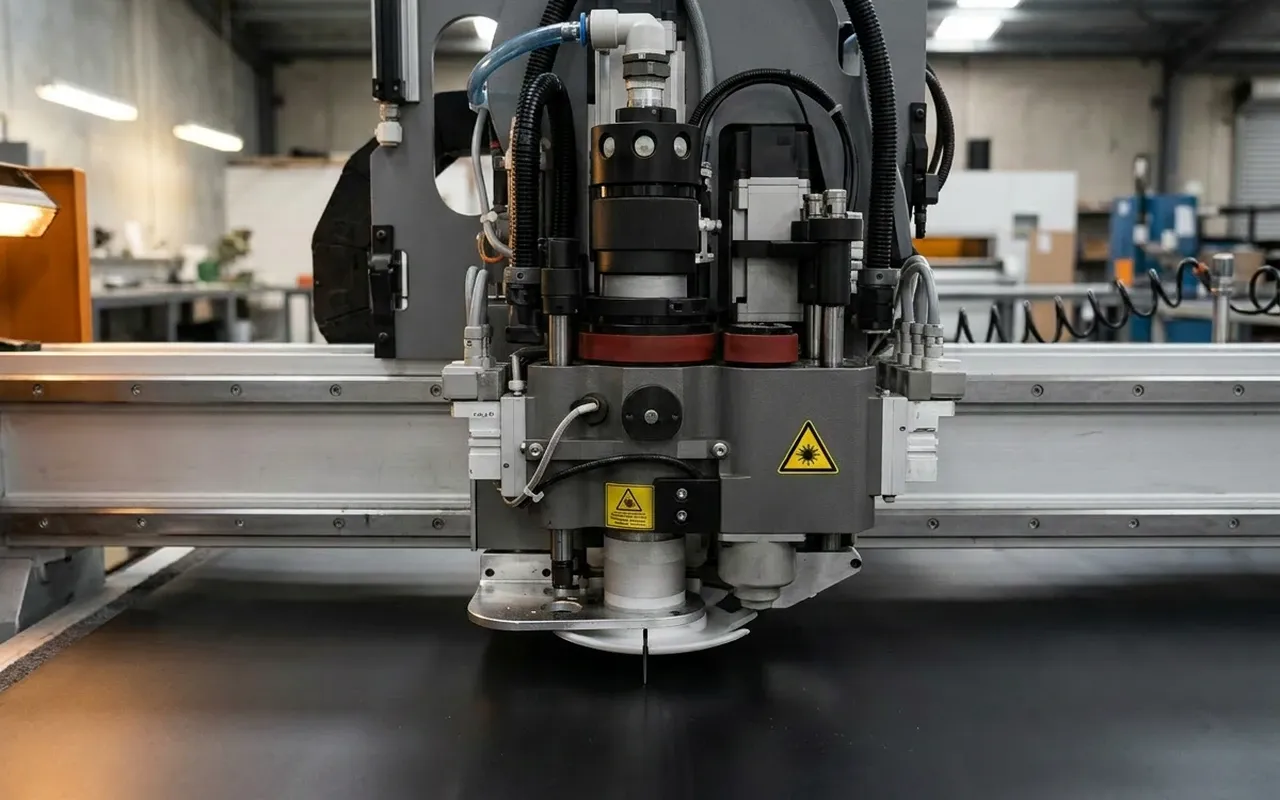
From metallic ring joints for high-pressure hydraulic systems to precision elastomeric seals for avionics enclosures. We cut to drawing or MIL-spec tolerance, and assemble the material documentation package when the contract calls for it.
Metal Gaskets
Spiral Wound, Ring Joint, Kammprofile, Jacketed
Metallic and semi-metallic gaskets for high-integrity flanged connections — Spiral Wound, Ring Joint, Kammprofile, and Jacketed types for petrochemical, refinery, and high-pressure pipeline service.
Explore ProductO-Rings & Cord
Standard & Custom Elastomer O-Rings and Cord Stock
O-rings and cord stock in Nitrile, Viton, EPDM, silicone, and speciality compounds. Standard metric and imperial sizes plus custom profiles and cut-to-length cord.
Explore ProductShims
Precision Shim Stock & Packs
Precision shim stock in stainless steel, brass, plastic, and composite materials. Available in sheets, rolls, and pre-cut packs.
Explore ProductSoft-Cut Gaskets
CNAF, Rubber, PTFE, Graphite, and more
Non-metallic gaskets cut to your drawings in compressed fibre, rubber, PTFE, flexible graphite, and other sheet materials.
Explore ProductHydraulic & Pneumatic Seals
Rod, Piston & Cylinder Seals
Machined seals for hydraulic and pneumatic cylinders including rod seals, piston seals, wipers, and wear rings.
Explore ProductMoulded Parts
Custom Moulded Rubber Components
Custom moulded rubber components including diaphragms, bellows, bumpers, and custom-profile seals to your specifications.
Explore ProductExplore Further
Explore Further
Specification-Grade Sealing for Your Programme?
We supply MIL-SPEC elastomers, metallic gaskets, and precision shims with EN 10204 Type 3.1 certificates and batch traceability available on request.
- FVMQ, FKM, silicone, and metallic materials stocked or sourced to order
- EN 10204 Type 3.1 material certificates available
- SAE AS 5316 shelf-life management on request
- Precision-cut to drawing or MIL-spec tolerance
Disclaimer
This page is provided for general engineering reference only and does not constitute professional advice, specification, or guarantee of performance. Actual results depend on specific application conditions. Universal Gaskets Pty Ltd accepts no responsibility or liability for decisions made based on this information. For full terms, see our Terms & Conditions.
Temperature ranges, chemical resistance ratings, and mechanical properties cited on this page are typical values for standard grades. Actual performance varies with compound formulation, filler package, and service conditions — contact us to confirm suitability for your specific application.