
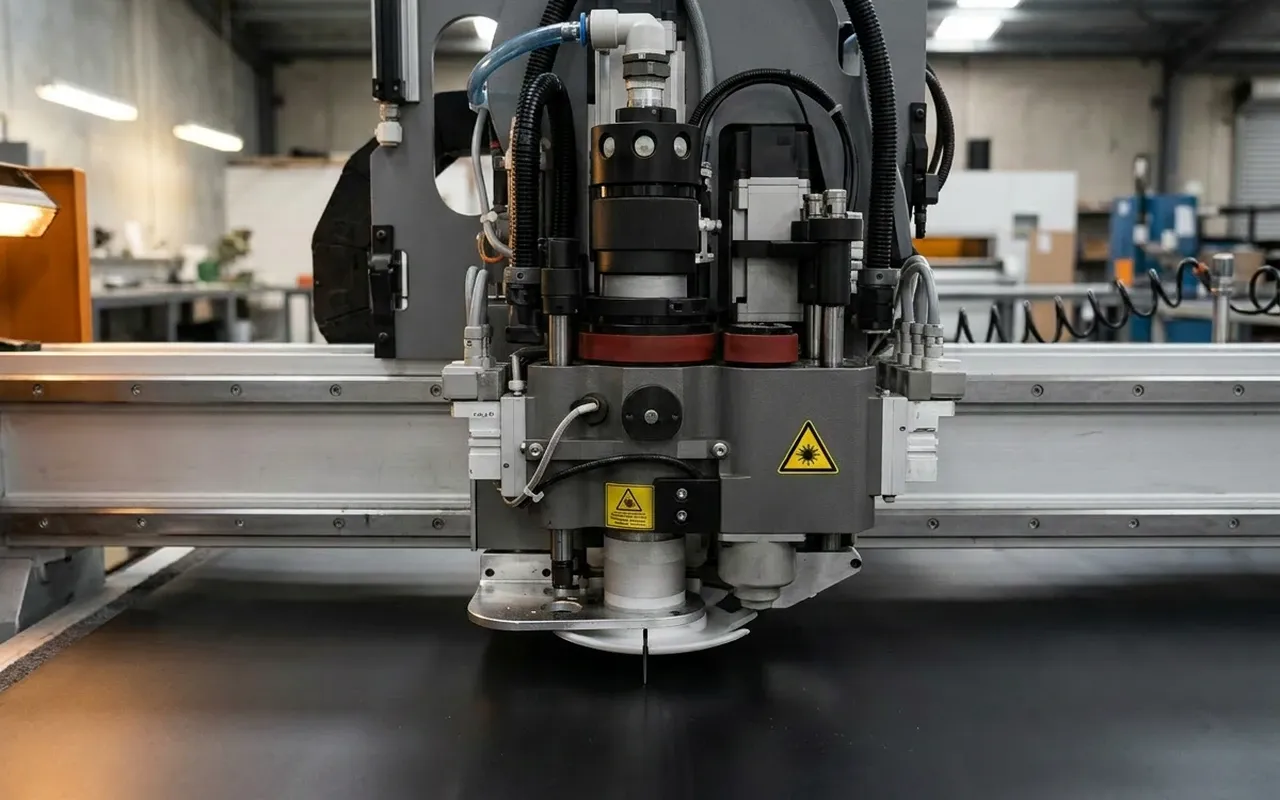
Tanged and Smooth Stainless Steel Insert Gasket Sheet
Metal-Reinforced CNAF
Metal-reinforced CNAF (compressed non-asbestos fibre) incorporates a stainless steel insert within the fibre sheet to provide mechanical reinforcement against blowout, improve handling strength, and increase pressure capability. Inserts come in two forms: tanged (perforated metal with raised tangs that mechanically grip the facing) and smooth (flat metal foil laminated between fibre facings). We stock both types for high-integrity sealing applications where standard soft-cut gaskets reach their limits.
At a Glance
Temperature Range
-50 °C to +200 °C continuous (NBR-bound facing); inorganic-fibre HT grades to +290 °C continuous, +427 °C intermittent
Thickness Range
1.5 mm to 4.5 mm
Pressure Range
Up to 150 bar at ambient (tanged insert); de-rates with temperature per facing P×T curve
Available Forms
Brands We Stock
Technical Properties
Typical values across stocked grades. Specific grade data sheets available on request.
Physical Characteristics
Tensile Strength
≥15 MPa (facing); insert adds mechanical strength
Compressibility
10–20% at 35 MPa (ASTM F36, facing material)
Recovery
45–60% (ASTM F36, facing material)
Chemical Resistance
Resistant To
- Saturated steam to ~200 °C continuous (NBR-bound facing); higher-temperature steam requires graphite-based composites or spiral-wound gaskets
- Petroleum oils and fuels
- Water and glycol mixtures
- Mild acids and alkalis
- Natural gas and LPG
- Refrigerants (most common types)
Limited Resistance
- Strong oxidising acids (dependent on facing compound)
- Chlorinated solvents (check facing material compatibility)
- Concentrated alkalis at high temperature
Not Recommended
- Strong oxidising agents (concentrated nitric acid, chlorine gas); specify PTFE-based gaskets instead
- Hydrofluoric acid (PTFE or fluoroelastomer gaskets are required)
- Applications requiring FDA food contact compliance, where PTFE or silicone should be used
Environmental Ratings
Flame Rating
Fire-safe certification (where required) is per API 6FA / 6FB or ISO 10497 type tests, NOT BS 7531 (which is a material specification, not a fire-safe scope)
Standards & Certifications
Standards Compliance
Common Applications
- High-pressure flange joints subject to pressure surges
- Steam main and header gaskets
- Exhaust manifold and turbo gaskets
- Pipework subject to vibration and thermal cycling
- Critical joints where blowout would be hazardous
- Fire-safe and safety-critical sealing applications
- Large-diameter flanges with high bolt spacing
- Refinery and petrochemical plant
Not Recommended For
- Not suitable for strong oxidising chemicals; specify PTFE or graphite gaskets instead
- Not food-safe. For food contact use PTFE, silicone, or FDA-approved elastomers
- Facing material dictates chemical limits, so always check compound compatibility for specific media
- Higher bolt load required than soft-cut gaskets due to the metal insert — verify flange rating
- Not recommended for vacuum service (spiral wound or ePTFE gaskets are the right choice)
Available Grades
Brands we stock: Garlock
Garlock Stress Saver® (Style 370, Tanged 304 SS Insert)
304 stainless steel tanged core with aramid/NBR fibre facing — Garlock's current production grade replacing the discontinued ST706. The perforated metal insert has raised tangs that mechanically lock into the CNAF facing, providing maximum blowout resistance under pressure surges, vibration, and thermal shock. The preferred choice for safety-critical and high-pressure joints. (Note: Garlock ST706 is end-of-life; specify Stress Saver® or Style 5500 for high-temperature service.)
Klingersil C-4408 (Steel Mesh Insert)
Low-carbon steel woven-mesh insert with high-temperature aramid/NBR facing. Continuous service to 399 °C on fluids and 232 °C on gases and steam per Klinger Australia datasheet. Suited to superheated steam, thermal oil, and exhaust gas service when service-medium limits are observed.
Smooth Stainless Steel Insert
Flat stainless steel foil laminated between CNAF facing layers. Provides improved handling strength, dimensional stability, and moderate blowout resistance without the mechanical interlock of tanged inserts. Suited to applications requiring reinforcement with a smoother gasket surface profile.
Need Metal-Reinforced CNAF?
We supply metal-reinforced cnaf in sheet, roll, and custom die-cut forms. Contact our team for pricing, data sheets, or technical assistance.
Disclaimer
This resource is provided for general engineering reference only and does not constitute professional advice, specification, or guarantee of performance. Actual results depend on specific application conditions. Universal Gaskets Pty Ltd accepts no responsibility or liability for decisions made based on this information. For full terms, see our Terms & Conditions.